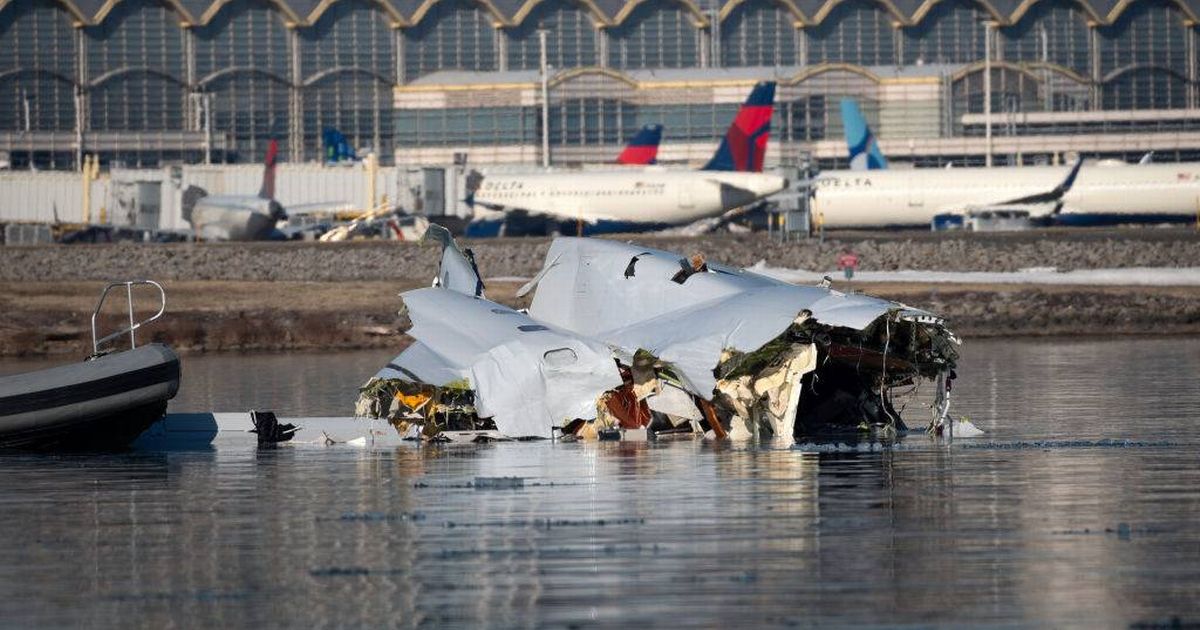
At least 28 bodies were pulled from the Potomac River after the helicopter apparently flew into the path of the American Airlines jet in January, killing 67 people

The United States has admitted that the Federal Aviation Administration (FAA) and the Army played a role in crash between an airliner and a military helicopter near the country’s capital that killed 67 people.
The official response to the first lawsuit filed by one of the victims’ families on Wednesday, December 17, said that the government is partly liable for the crash because the air traffic controller violated procedures about when to rely on pilots to maintain visual separation that night.
The Army helicopter pilots also failed “to maintain vigilance so as to see and avoid” the airline jet, which makes the government liable, the filing said, but suggested that others, including the pilots of the jet and the airlines, may have also played a role. The lawsuit also blamed American Airlines and PSA Airlines for their roles in the crash, who have filed motions to dismiss.
At least 28 bodies were pulled from the Potomac River in the deadliest plane crash in the U.S. in more than two decades after the helicopter apparently flew into the path of the American Airlines jet while landing at Ronald Reagan National Airport in northern Virginia, across the river from Washington D.C.
Sixty passengers and four crew members were aboard the passenger plane, while three soldiers were aboard the Black Hawk helicopter.
Robert Clifford, an attorney for the family of victim Casey Crafton, said the government admitted “the Army’s responsibility for the needless loss of life.” Clifford also said the government admitted the FAA failed to follow air traffic control procedures while “rightfully” acknowledging others, the two airlines, also contributed to the deaths.
The National Transportation Safety Board (NTSB) will release its report on the cause of the crash early next year. Investigators have highlighted a number of factors that contributed, including the helicopter flying too high on a route that allowed inadequate separation between planes landing on the airport’s secondary runway and helicopters passing below.
The board also said the FAA failed to recognise the dangers around the busy airport even after 85 near misses in the three years before the crash.
Before the collision, the controller twice asked the helicopter pilots whether they had the jet in sight. The pilots said they did and asked for visual separation approval to use their own eyes to maintain distance.
FAA officials acknowledged at the NTSB’s investigative hearings that the controllers at the airport had become overly reliant on the use of visual separation.
The agency has since ended this practice.
Witnesses told the NTSB that they questioned how well the helicopter crew could spot the plane while wearing night vision goggles and whether the pilots were looking in the right spot.